
Orbital Cart CMS
Collaborative cart workflow for team-based purchasing and approvals
Designed a shared cart experience where buyers, budget owners, and purchase approvers can review items, discuss decisions, and approve purchases before checkout.
Role: Product Designer
Scope: Product concept, user flows, role permissions, interaction states, approval workflow, low-fidelity wireframes
Tools: Figma
Timeline: ~2 weeks
Scope: Product concept, user flows, role permissions, interaction states, approval workflow, low-fidelity wireframes
Tools: Figma
Timeline: ~2 weeks
The workflow shows how a cart can move from individual item selection to team review, approval, and checkout control.
Buyer Experience
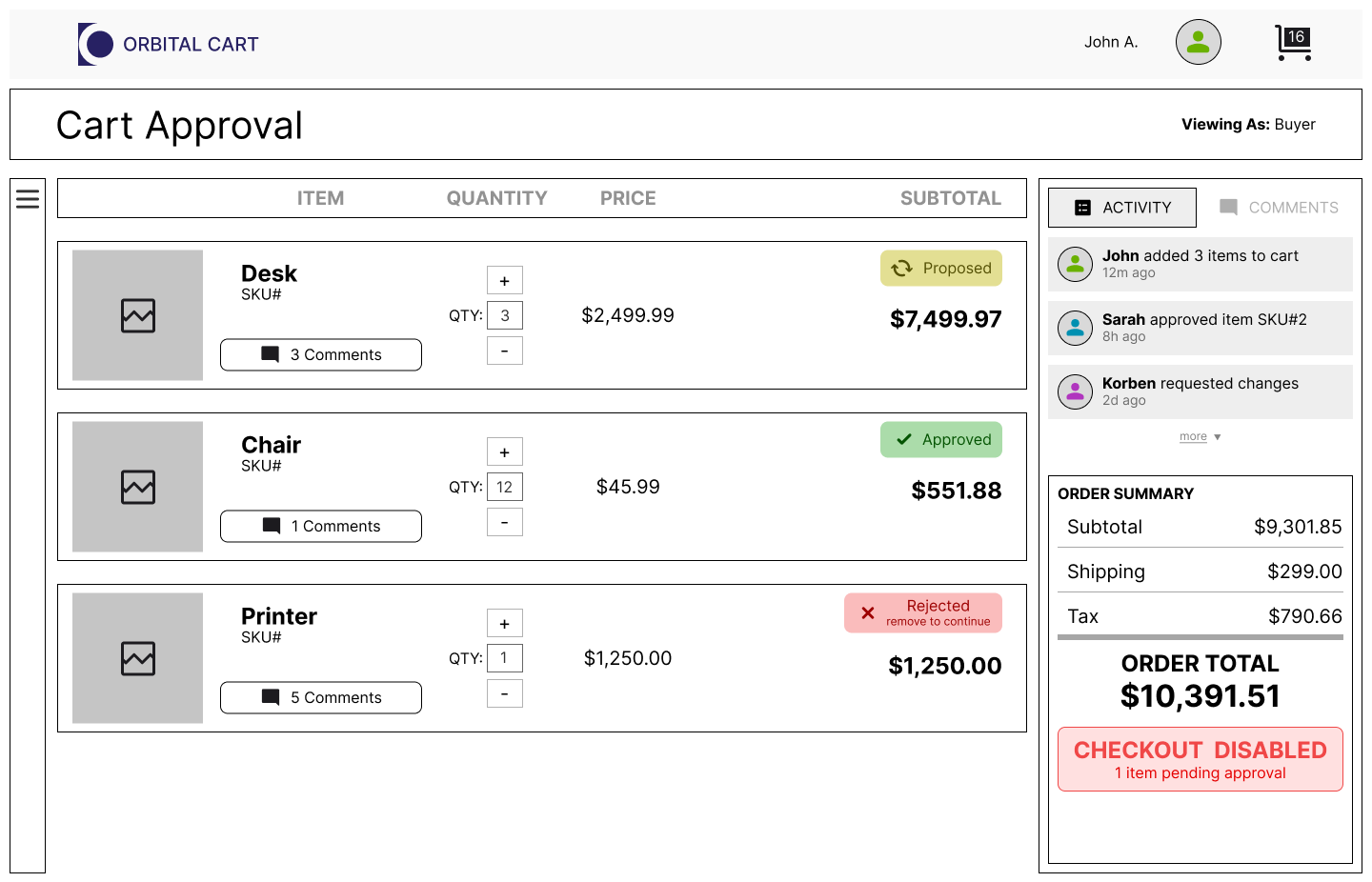
Buyers add items and track approval status while waiting for decisions
The Problem
Most ecommerce carts are built for a single user, while real-world purchasing involves multiple stakeholders.
The Idea
A shared purchasing workspace built directly into the cart, so decisions stay connected to the items being reviewed.
Core Workflow
Items move through three states:
• Proposed – Added and awaiting review
• Approved – Cleared for purchase
• Rejected – Needs revision
• Proposed – Added and awaiting review
• Approved – Cleared for purchase
• Rejected – Needs revision
Checkout is locked until required approvals are complete.
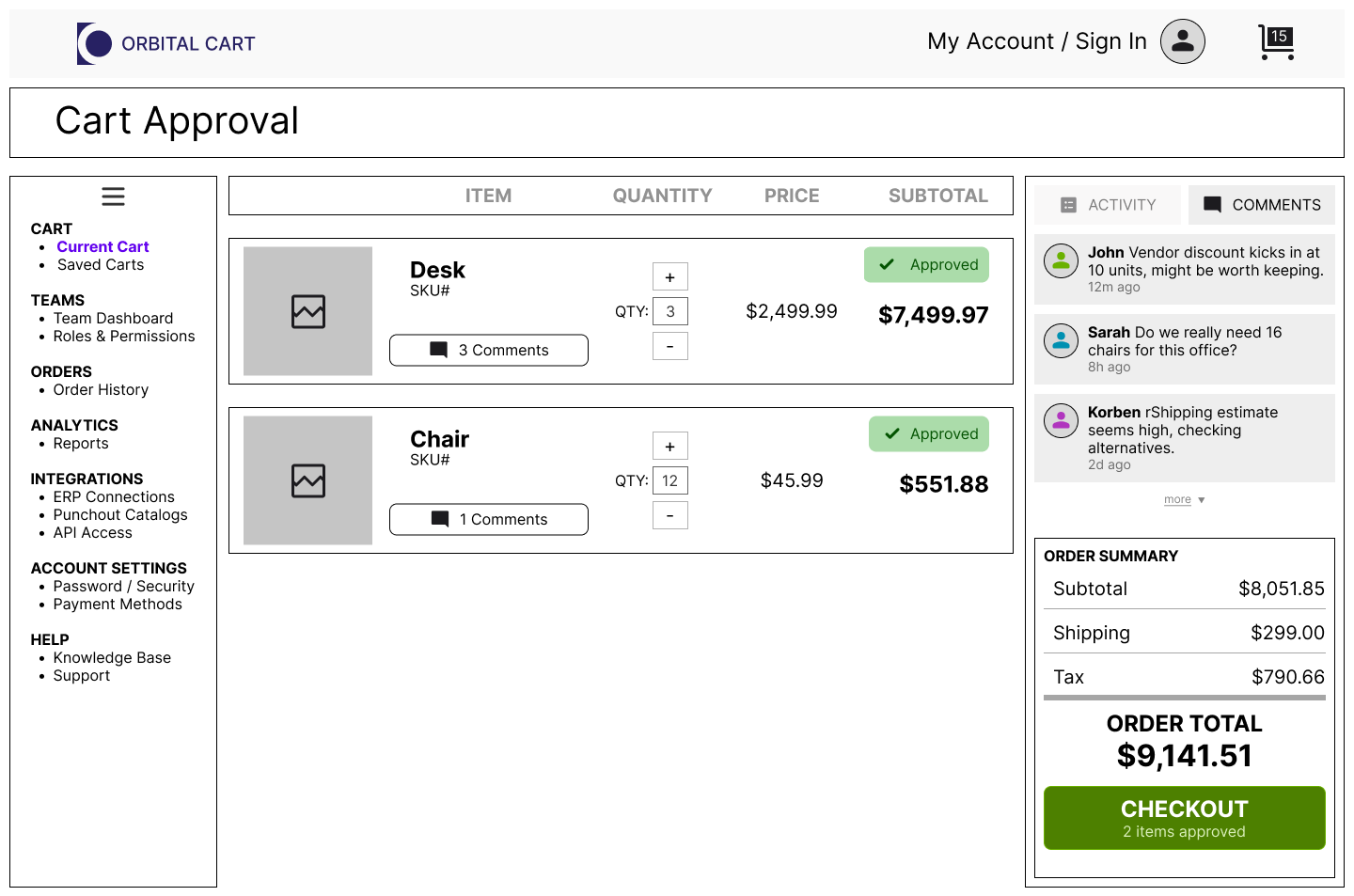
Checkout becomes available once all items are approved
Item Review Interaction
Approvers can expand an item to review details, discuss, and approve or reject directly in the cart.
Decisions stay tied to the item instead of getting lost in email or chat.
Decisions stay tied to the item instead of getting lost in email or chat.
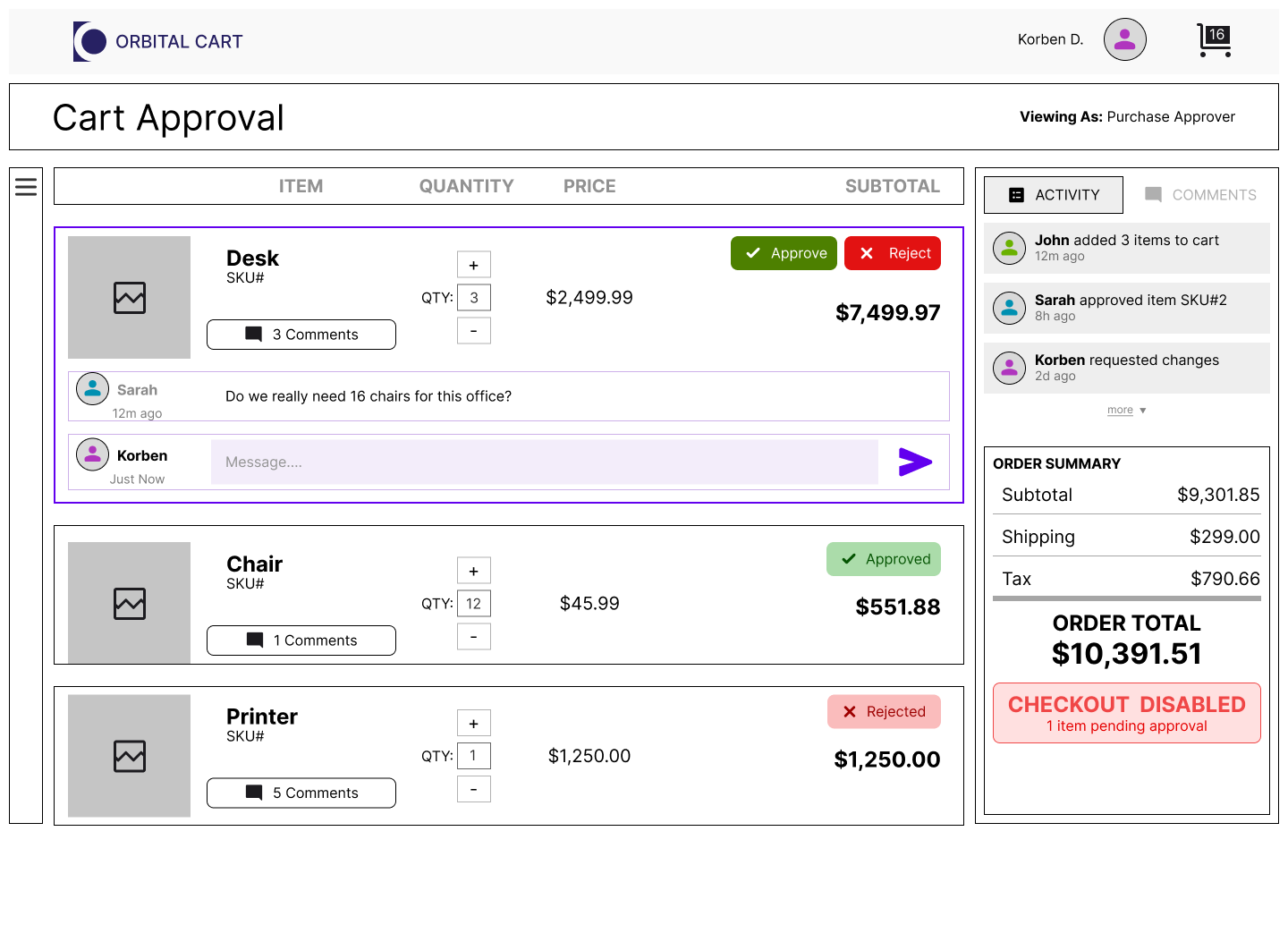
Purchase approvers review proposed items and make final approval or rejection decisions
Roles and Permissions
Supports role-based permissions that reflect real purchasing workflows.
• Buyers add items and participate in discussions
• Budget owners review item purchases
• Purchase approvers authorize final checkout
• Budget owners review item purchases
• Purchase approvers authorize final checkout
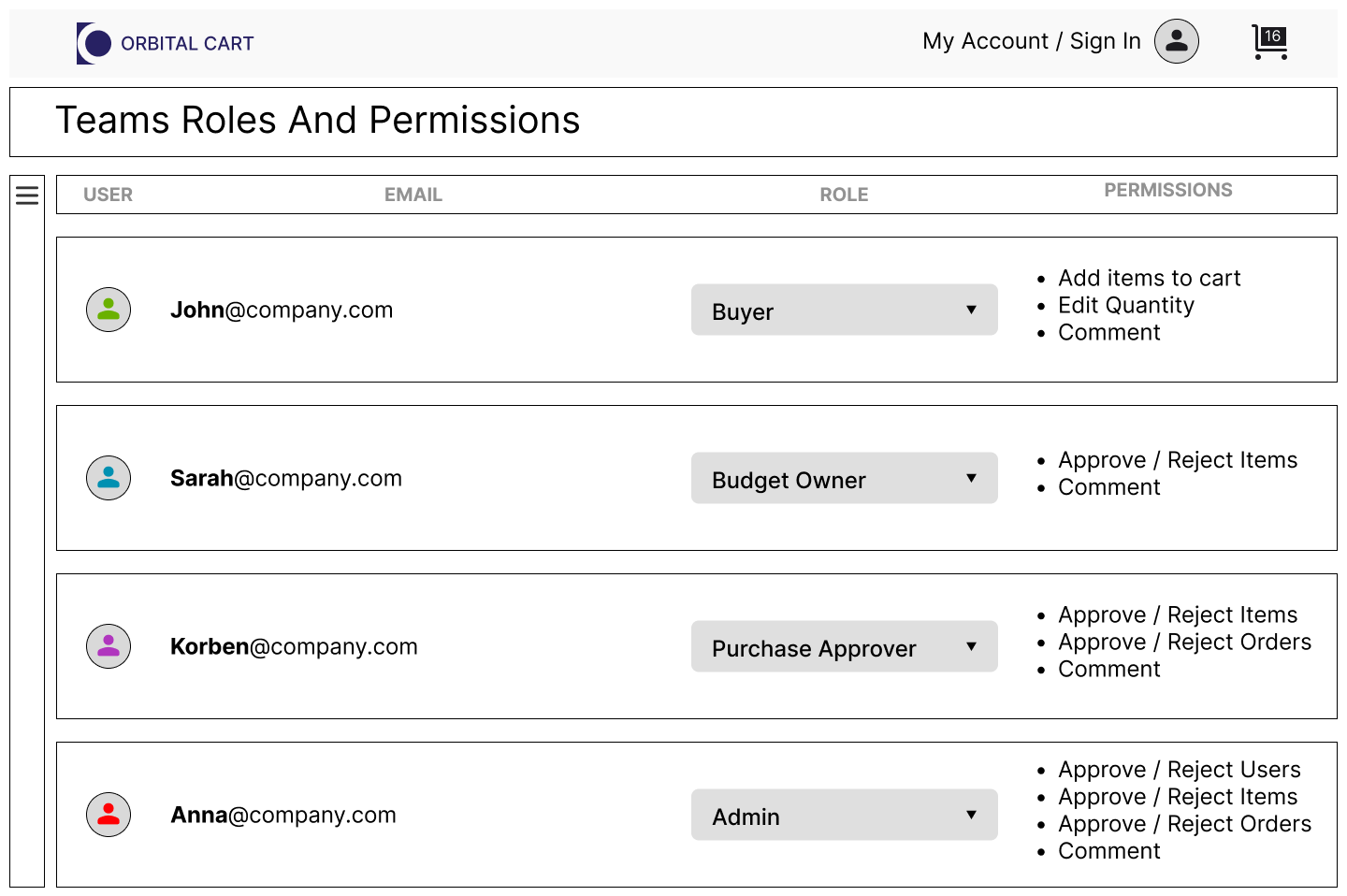
Defines roles and permissions that control who can propose, review, and approve items
Reflection
Explored how an ecommerce cart could support team-based purchasing, role-based approval, and clearer decision tracking.